 It is time for a FIRST Wild Card Tour book review! If you wish to join the FIRST blog alliance, just click the button. We are a group of reviewers who tour Christian books. A Wild Card post includes a brief bio of the author and a full chapter from each book toured. The reason it is called a FIRST Wild Card Tour is that you never know if the book will be fiction, non~fiction, for young, or for old...or for somewhere in between! Enjoy your free peek into the book!
You never know when I might play a wild card on you!
Today's Wild Card author is:
and the book:
David C. Cook; New edition (April 1, 2011)
ABOUT THE AUTHOR:
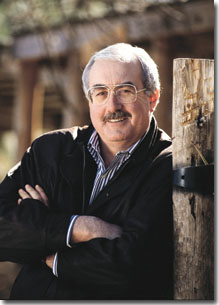
Steve Farrar is the founder and chairman of Men’s LeadershipMinistries. He is a frequent speaker at men’s conferences throughout the country. Farrar has authored 16 books, including Point Man, Battle Ready, and God Built.
Visit the author's website.
SHORT BOOK DESCRIPTION:
 Best-selling author and Bible teacher, Steve Farrar, reminds us that the story of Daniel holds powerful truths for today. Everyone can recall as a young child having the courage to head out the door—whether it was to your first day of school, your first game in little league, or your piano lesson. Then life takes over and you lose your bravado, giving in to the fears of the world around you. In True Courage readers will discover a God who provides incredible courage in the midst of uncertainty, even through treacherous, evil days. He gives us the courage to face lions in their den—or an unexpected job loss, the diagnosis of a sick child, or the return of a debilitating cancer.
Product Details:
List Price: $14.99
Paperback: 240 pages
Publisher: David C. Cook; New edition (April 1, 2011)
Language: English
ISBN-10: 9781434768735
ISBN-13: 978-1434768735
ASIN: 1434768732
AND NOW...THE FIRST CHAPTER:
Courage to Stay the Course
True Courage can throw you at first, because it’s counterintuitive.
In other words, it’s the opposite of what you might expect.
My best example? Getting into a pickup and backing up a trailer into the garage. No sweat, you say? What’s the big deal about backing a trailer into a garage? It’s no sweat until you try to pull it off. If you’ve never done it before, thirty seconds into it you’re sweating like a fire hydrant because that pickup and trailer are twisted like a pretzel—and you’re suddenly parked in the flowerbed with no clue how to get out.
Why it is so hard to back up a trailer? It’s counterintuitive, that’s why. If you want the trailer to go left, you don’t turn the wheel left. No, if you want to go left, you have to turn to the right. If you’re going forward and you want to turn left then you turn left—but not if you’re backing up. When you’re backing up, the rules change, and to get that trailer in the garage you have to go against the grain of what makes sense.
Okay, now let’s plow right into Daniel, who right out of the blocks, demonstrates that True Courage is … counterintuitive.
In Daniel 1, we find two events that reveal True Courage.
Also in Daniel 1, we discover three traits that are the basis of True Courage.
Two Events
The Crash
“In the third year of the reign of Jehoiakim king of Judah, Nebuchadnezzar king of Babylon came to Jerusalem and besieged it. And the Lord gave Jehoiakim king of Judah into his hand, with some of the vessels of the house of God. And he brought them to the land of Shinar, to the house of his god, and placed the vessels in the treasury of his god” (Dan. 1:1–2).
We can read this verse and blow right by it. But it is huge in biblical history, and it was huge for Daniel. When Nebuchadnezzar showed up at the gates of Jerusalem, it was the beginning of the end.
When I was a kid in school in the fifties, we used to have drills where we would duck under our desks in case of a nuclear attack from the Soviet Union. The Russian president, Khrushchev, had said he would bury us. So we got under our desks so that we would be protected from the Soviet nuclear missiles. That way Khrushchev couldn’t bury us, and our nation wouldn’t be crushed.
The prophet Jeremiah had told the nation that if they continued to rebel against the one true God and mock His Word, they would crash. And that’s exactly what happened. Nebuchadnezzar showed up in 605 BC, and everything changed.
It would have been easy for Daniel to imagine that his life was over. God’s judgment had arrived, and it was everyone’s worst nightmare. Another king from a more powerful nation was now calling the shots. He would leave a Jewish king in place, but only as a figurehead and puppet. For the little nation of Judah, the gig was up.
When the nation crashed, so did Daniel’s plan for his life. He was just a teenager, but teenagers have dreams, hopes, and wonderful ideas about what their lives will look like someday.
For Daniel, that someday—the someday of his boyhood dreams—would never come. All of those dreams died when the Babylonians smashed through Jerusalem’s gates. All the rules had changed, and nothing could ever look or feel the same again. Not ever.
Sometimes our worlds crash, and so do our dreams.
I have a friend who waved to his wife and daughter as they drove off for a short overnight trip. Two hours later he was in a helicopter, landing at the scene of a head-on collision that took his wife’s life and severely injured his daughter. When that truck crossed the center divider and crashed head-on into his wife’s car, my friend’s entire existence crashed. He held her lifeless body in his arms, and it was the end of everything—or so it seemed in that moment.
At some point every man’s life crashes, and it seems like life is over. It may be the death of a spouse or a child. It could be the death of a marriage. A man’s life can crash through a bankruptcy or because a teenager has run away from home. There are a thousand different events that can crash our lives. Sometimes the crash is the result of a bad decision, but it can just as easily be the result of simply living life.
When a man’s life crashes, it always kicks in cause and effect.
Sometimes, the results are devastating, and a man simply gives up, withdraws in defeat and despair, and checks out of life. In other words, the crash changes everything—permanently, and for the worse. At other times, a man will take a different course and keep moving forward, trusting God, though the path has all but disappeared in front of him.
That, my friend, is a counterintuitive response.
And that is the path of True Courage.
The Change
Some changes are exciting, propelling you into a new and positive life. But when the change is the direct result of a crash, it’s another matter altogether. Your life and your heart have been broken—and you’re wondering how in the world you will ever pick up the pieces. You’re in the middle of a transition, an unwanted change, and there’s no turning back. And when you find yourself in unwelcome change, you are suddenly dealing with new stuff in your gut—anxiety, perplexity, disorientation, crushing disappointment, or even sheer terror.
The road forks before you, and you find yourself walking where you have never walked before. You wake up one morning, and it seems like everything once so dear and familiar to you has been stripped away. You’re on alien turf and maybe wondering how in the world you got there—and what you’re going to do next. And then you remember the crash and realize that’s how you got there—but you still don’t have a clue what you’re going to do next. Here’s how the Bible describes the huge changes that crashed into the life of the young man named Daniel:
Then the king commanded Ashpenaz, his chief eunuch, to bring some of the people of Israel, both of the royal family and of the nobility, youths without blemish, of good appearance and skillful in all wisdom, endowed with knowledge, understanding learning, and competent to stand in the king’s palace, and to teach them the literature and language of the Chaldeans. The king assigned them a daily portion of the food that the king ate, and of the wine that he drank. They were to be educated for three years, and at the end of that time they were to stand before the king. Among these were Daniel, Hananiah, Mishael, and Azariah of the tribe of Judah. And the chief of the eunuchs gave them names: Daniel he called Belteshazzar, Hananiah he called Shadrach, Mishael he called Meshach, and Azariah he called Abednego. (Dan. 1:3–7)
Daniel’s nation crashed, and so did his world. Almost overnight, he found himself swimming in unwanted change. He was taken from his family, friends, and home, and relocated to a foreign city, with a foreign culture, trying to pick up some basic phrases in a foreign language. And on top of that, he suddenly landed in a foreign university. That’s a lot of unwanted change—but that’s what happens when your world comes crashing down. Daniel was immediately enrolled in a three-year course of study at the University of Babylon. You might call it Daniel’s “education,” but then again, the word indoctrination might fall closer to the mark. So what has changed? It’s still true today. Indoctrination is still the primary work of secular universities, just as it was three thousand years ago in ancient Babylon.
If you think that I overstate the case, note that something had to occur before Daniel could move into the dorm. They first stripped him of his name—which was step one in stripping him of his faith. One commentator writes, “Daniel and his friends received genuine heathen names in exchange for their own significant names, which were associated with that of the true God.”1
The Babylonian conquerors wanted to swallow these young people whole—mind, body, and soul—completely estranging them from their old home and their relationship with the God of Israel.
Daniel in Hebrew means “God is my Judge.” It was changed to Belteshazzar, which means “whom Bel favors.” Daniel’s friends also went through the same drill. Hananiah means “God is gracious.” He became known as Shadrach, which means “illumined by Shad [a sun god].” Mishael means “who is like God? God is great.” They tagged him with Meshach, which means “who is like Shach [a love goddess].” Finally, Azariah means “God is my helper,” but the tenured university faculty came up with Abednego, which means “the servant of Nego [a fire god].”2
Daniel found himself in a Babylonian university system that was a place of tremendous pressure and competition. At the end of the three years, each of the young men brought over from Judah were to stand before the king for the biggest final exam of their young lives. What’s more, I’m pretty sure they couldn’t bring their books, CliffsNotes, laptops, or iPhones to the exam. This is how Scripture records that moment after the university had dubbed Daniel and his friends with new names:
Daniel resolved that he would not defile himself with the king’s food, or with the wine that he drank.
Therefore he asked the chief of the eunuchs to allow him not to defile himself. And God gave Daniel favor and compassion in the sight of the chief of the eunuchs, and the chief of the eunuchs said to Daniel, “I fear my lord the king, who assigned your food and your drink; for why should he see that you were in worse condition than the youths who are of your own age? So you would endanger my head with the king.” Then Daniel said to the steward whom the chief of the eunuchs had assigned over Daniel, Hananiah, Mishael, and Azariah, “Test your servants for ten days; let us be given vegetables to eat and water to drink. Then let our appearance and the appearance of the youths who eat the king’s food be observed by you, and deal with your servants according to what you see.” So he listened to them in this matter, and tested them for ten days. At the end of ten days it was seen that they were better in appearance and fatter in flesh than all the youths who ate the king’s food. So the steward took away their food and the wine they were to drink, and gave them vegetables.
As for these four youths, God gave them learning and skill in all literature and wisdom, and Daniel had understanding in all visions and dreams. At the end of the time, when the king had commanded that they should be brought in, the chief of the eunuchs brought them in before Nebuchadnezzar. And the king spoke with them, and among all of them none was found like Daniel, Hananiah, Mishael, and Azariah. Therefore they stood before the king. And in every matter of wisdom and understanding about which the king inquired of them, he found them ten times better than all the magicians and enchanters that were in all his kingdom. And Daniel was there until the first year of King Cyrus. (Dan. 1:8–21)
In Daniel 1:3, Daniel was a teenager. By the time we reach verse 21, he’s somewhere around ninety years of age. Cyrus conquered Babylon in 539 BC. Verses 3–21 give us a very short bio of Daniel’s career in Babylon. He started in the Babylonian university, was promoted like a rocket, and served in the highest reaches of power for at least seventy years.
In the early years at that godless university, God prepared Daniel and his sidekicks to serve as royal advisors to the king of Babylon. In addition, God gave Daniel a stunning gift: the ability to interpret dreams and visions. He was truly one of a kind. He and his friends who stood for the Lord had a place of remarkable influence because their advice, counsel, and wisdom were ten times better than anyone who had ever graduated from the University of Babylon.
At the risk of their very lives, these young men honored God by refusing to violate their consciences, and the Lord honored their faithfulness. Daniel went on to keep his high place of honor for seventy years. For the rest of his life he would live and work in the corridors of power and luxury, politics, and intrigue. The king and the palace were to be his sphere for the rest of his days.
Now how in the world did he do that?
Three Traits
How did this young man maintain his balance on such treacherous turf? And did he manage to keep that balance for the seventy years of his life there?
As I have read and reread the account of Daniel’s life, three traits continually come to the surface: humility, trust, and hope.
They don’t show up just once or twice. Throughout his life they are woven into the fabric of his character and decision making. They are a key part of Daniel’s True Courage. That may not seem obvious at first glance—what does humility, trust, and hope have to do with True Courage? The answer is all three are counterintuitive. They all run against the grain of what we would expect in Daniel.
It hit me one day that those three traits in Daniel’s life are captured in one of the shortest psalms in the Bible: Psalm 131. Interestingly enough, it’s one of the psalms of the ascent—psalms that the men of Judah would sing as they would make their way up the mountain to Jerusalem three times a year. God commanded all of the men to come during these times. But Daniel was never able to do that in his entire life. The nation was in captivity, and the feasts were on hold.
But the traits of Psalm 131 weren’t on hold in his life.
He lived them out every day and in so doing demonstrated True Courage.
He actually lived out that psalm’s truths in a sometimes seductive, always tyrannical environment. And he did it for seventy years.
It was C. H. Spurgeon who commented that Psalm 131 is one of the shortest psalms to read … and one of the longest to learn.
O LORD, my heart is not lifted up; my eyes are not raised too high;
I do not occupy myself with things too great and too marvelous for me.
But I have calmed and quieted my soul, like a weaned child with its mother; like a weaned child is my soul within me. O Israel, hope in the LORD from this time forth and forevermore. (Ps. 131:1–3)
Did you catch the three essential traits in this psalm? Verse 1 speaks of the trait of humility. Verse 2 focuses on trust, and verse 3 speaks of a great hope. It’s safe to say that Daniel consistently exhibited these traits throughout his life.
Essential Trait 1: Humility
If you’re out looking for an example of humility, you probably shouldn’t start with the NFL—and particularly with wide receivers. Wide receivers, generally speaking, are known for their arrogant touchdown dances. There are notable exceptions, but arrogance could be tattooed quite naturally on most of them.
It seems like whenever these guys just happen to catch a pass in the end zone, they suddenly start pounding their chests and strutting around like a peacock. Now what’s ironic is that the guy probably dropped the last four balls that were thrown his way. But this one he caught because it went through his hands and lodged in his face mask. So now he’s running around like he just did something important. What he did was catch a football. He’s paid (actually overpaid) to catch footballs.
The wide receiver who catches a touchdown pass and then offers a sacrifice to the god of self in the end zone has forgotten a few things. He has forgotten that the touchdown was actually a team effort. There was a quarterback who had the guts to stand in the pocket and get sandwiched by six hundred pounds of blitzing wild men. There are also the anonymous offensive linemen who do the work in the trenches that nobody sees or appreciates. They get stepped on, kicked in the groin, and blinded by a thumb in the eyes. And that’s just during pregame warm-ups! Arrogance is getting full of yourself real quick and losing all perspective concerning your accomplishments.
There are two ways we can depart from humility. The first is arrogance, and it’s also been known to show up in individuals who are not wide receivers. (Frankly, you can be an incredibly arrogant person at a fast-food counter. I’ve met some of them.) Verse 1 is a description of balanced humility. The psalmist says that his heart is not lifted up. He’s not saying that his heart has never been lifted up, but rather that he’s trying to keep his heart in check. In other words, David is doing a little self-assessment here. He’s checking out his heart, as Solomon advised in Proverbs 4:23: “Keep your heart with all vigilance, for from it flow the springs of life.”
The psalmist then makes sure his eyes aren’t raised too high so that they’re not too lofty. In other words, he’s careful of putting all of his energy into reaching the next level—whatever that may be. “There is nothing wrong with the desire to do well,” wrote D. Martyn Lloyd-Jones, “as long as it does not master us. We must not be governed by ambition.”3
The writer knows that it is God who grants promotion (Ps. 75), and He knows best when we are ready for the higher place. Until then, we should mind our assigned posts—and ourselves.
Humility doesn’t try to understand things that are beyond comprehension. Humility understands that some answers to hard questions will remain secret (Deut. 29:29). And that’s okay.
The second way we can wander away from humility is when we get into self-condemnation and self-loathing. We do something stupid that we promised ourselves we would never do again—and then because of our disappointment, we start telling ourselves we’re worthless. We’ve all done stupid things—and then done them again and again.
Speaking for myself, I’ve got enough hours in “stupid” to get a PhD. I actually have enough hours in “stupid” to teach “stupid” at a graduate level. And if we have really screwed up and done something that has horrible consequences—not only for us but also for the people we love—we start riding ourselves and telling ourselves that it would be better for them if we weren’t even alive.
Whenever a believer commits suicide, you must suspect that there was demonic oppression involved, which led to self-condemnation and self-loathing. That’s the work of Satan. The Bible doesn’t
call him the “accuser of the brethren” for nothing.
So what is humility and how do we find its balance that keeps us from arrogance on one hand and self-condemnation on the other? C. J. Mahaney hit the nail on the head when he stated, “Humility is honestly assessing ourselves in light of God’s holiness and our sinfulness.” 4 Romans 12:3–8 really brings it into focus:
For by the grace given to me I say to everyone among you not to think of himself more highly than he ought to think, but to think with sober judgment, each according to the measure of faith that God has assigned. For as in one body we have many members, and the members do not all have the same function, so we, though many, are one body in Christ, and individually members one of another. Having gifts that differ according to the grace given to us, let us use them: if prophecy, in proportion to our faith; if service, in our serving; the one who teaches, in his teaching; the one who exhorts, in his exhortation; the one who contributes, in generosity; the one who leads, with zeal; the one who does acts of mercy, with cheerfulness.
I see three principles here that helped Daniel keep his balance with humility and that I believe will help us do the same.
• Know who you are
• Know what God has given to you
• Stay in your sphere
How to Keep Your Balance
Know Who You Are
The plumb line on humility is this: Don’t think too highly of yourself—and don’t think too lowly, either.
I like the way J. B. Phillips paraphrased Romans 12:3:
As your spiritual teacher I give this piece of advice to each one of you. Don’t cherish exaggerated ideas of yourself or your importance, but try to have a sane estimate of your capabilities by the light of the faith that God has given to you all.
This passage directs us to use sober or sound judgment (or “a sane estimate”) in knowing who you are. If you’re an average singer, don’t plan on cutting a CD and taking a worldwide tour. You may like music, and your brother-in-law might think you’re pretty good at karaoke, but if you’re average or even a little above average, chances are you’re not going to make it in New York or Nashville.
Know What God Has Given You
You don’t have all of the gifts mentioned in Romans 12:3–8. You’re part of the body of Christ, and He has distributed gifts to each of us. Some have more gifts than others—but everyone has a gift.
We often meet someone whom we respect and admire and think, I wish I could be like him, or maybe, I wish I had his personality. But you can’t be like him, and you don’t have his personality. That individual may have gifts you don’t have, but don’t waste your time—and your life—moping around because you don’t have certain gifts. When you do that, your heart is getting proud, your eyes are getting lofty, and you’re not thinking straight. What are the gifts God has given to you? Don’t depreciate them, and don’t
despise them. And don’t imagine that they’re not important—to God and to others.
Years ago I was up early on a Sunday morning and discovered we were out of something—salt, sugar, Ovaltine—I honestly can’t remember what it was. It was too many years ago. But here’s what I do remember. I found what I was looking for on the top shelf of the pantry, and when I reached up to grab it, I knocked over a glass jar of sweet pickles that immediately yielded to the law of gravity and fell
seven feet where it landed on my unprotected pinkie toe.
I’d never given much thought to my pinkie toe and its ministry in my life until that moment. But for the next three or four months I had trouble thinking about anything else. When that pickle-assaulted pinkie toe was broken, it messed up my entire life. I couldn’t walk, I couldn’t sleep, and I couldn’t think. I just wanted that little toe to heal up and get back to its assigned post.
Stay in Your Sphere
You’ve been given gifts. Stay with them. Develop them, work hard, and do your work to the glory of God. Colossians 3:23–24 says, “Whatever you do, do your work heartily, as for the Lord rather than for men, knowing that from the Lord you will receive the reward of the inheritance. It is the Lord Christ whom you serve” (NASB).
All work is valuable, and even the Babylonian heathens knew this when they took over Jerusalem and brought back the first round of exiles. In Jeremiah 29:1–2, the prophet makes reference to the people who were taken in the second wave from Judah to Babylon in 597 BC:
These are the words of the letter that Jeremiah the prophet sent from Jerusalem to the surviving elders of the exiles, and to the priests, the prophets, and all the people, whom Nebuchadnezzar had taken into exile from Jerusalem to Babylon. This was after King Jeconiah and the queen mother, the eunuchs, the officials of Judah and Jerusalem, the craftsmen, and the metal workers had departed from Jerusalem.
Daniel and his buddies were members of the educated royal family and had already been taken and enrolled in the University of Babylon (Dan. 1:1–7). But in the second wave, the Babylonians brought back additional members of the royal family, some government bureaucrats, and, watch this—craftsmen and metal workers.
You can understand their bringing in the government guys and the queen, but why would they single out craftsmen and metal workers? It was because they were valuable. Guys who are gifted with their hands, who can work with wood or metal, are critical. Try to build an army without craftsmen and metal workers. Those are the guys who build the chariots and the siege ramps and supply the infantry with swords and armor.
If you’re gifted with your hands—if you’re a finish carpenter or an excellent craftsman—don’t waste your time wishing you could be a preacher or a prime minister. That’s not your calling, and it’s not your sphere. Work with that wood, excel with that needle and thread, and do it to the glory of God!
On the other hand, Daniel, who was gifted with the wisdom and knowledge to lead a government, should not have been shoeing horses and working around a forge. That is honorable and critical work, but Daniel wasn’t called or gifted in that area. He needed to stay in his sphere. He wasn’t to think too highly or too lowly of himself. Instead, he correctly assessed his own gifts and then got after it with what God had given him.
Staying in your sphere doesn’t mean that you don’t improve yourself—you do. So take some classes and get the credentials you need to succeed in your sphere. That may mean that you need a college degree—but then again, you may not need a college degree if you’re going to repair cars or make crowns in a dental lab. But whatever your sphere is, work hard, show up on time, better yourself, do quality work, and God will see to your advancement. But don’t try to be something that you’re not!
Right off the top, I’m reminded of a king in the Old Testament who refused to stay in his sphere: Uzziah, king of Judah.
Uzziah started strong. He was one of the most productive kings that Judah ever had. His vast accomplishments are listed in 2 Chronicles 26:14. And then we read these words:
In Jerusalem he made engines, invented by skillful men, to be on the towers and the corners, to shoot arrows and great stones. And his fame spread far, for he was marvelously helped, till he was strong.
But when he was strong, he grew proud, to his destruction. For he was unfaithful to the LORD his God and entered the temple of the LORD to burn incense on the altar of incense. But Azariah the priest went in after him, with eighty priests of the LORD who were men of valor, and they withstood King Uzziah and said to him, “It is not for you, Uzziah, to burn incense to the LORD, but for the priests, the sons of Aaron, who are consecrated to burn incense. Go out of the sanctuary, for you have done wrong, and it will bring you no honor from the LORD God.” Then Uzziah was angry. Now he had a censer in his hand to burn incense, and when he became angry with the priests, leprosy broke out on his forehead in the presence of the priests in the house of the LORD, by the altar of incense. And Azariah the chief priest and all the priests looked at him, and behold, he was leprous in his forehead! And they rushed him out quickly, and he himself hurried to go out, because the LORD had struck him. And King Uzziah was a leper to the day of his death, and being a leper lived in a separate house, for he was excluded from the house of the LORD. And Jotham his son was over the king’s household, governing the people of the land. (2 Chron. 26:15–21)
What haunting words: “He was marvelously helped, till he was strong.”
When he became strong, he grew proud and lost his humility. And it led to his destruction. He refused to stay in his sphere and decided that he would go ahead and do the work that was only to be done by the priest. When he lost his humility, he refused to stay in his sphere—and he was disciplined as a leper for the rest of his days. Then he was forced to stay in his sphere—in a separate house, excluded from the house of the Lord.
Daniel was humble enough to stay in his sphere.
And God favored his life and work for the next seventy years.
Essential Trait 2: Trust
The second essential trait is trust in God, and it’s something that takes years to learn. We fight it from the time we are born as Psalm 131:2 describes: “But I have calmed and quieted my soul, like a weaned child with its mother; like a weaned child is my soul within me.”
In the days of the Old Testament, children often weren’t weaned until the age of three or four. And when the day of weaning came, the little ones fought against it with everything within them. The mother’s breast was the place of security, comfort, affection, and nourishment. But a child must get on with life, and so the time of weaning comes.
Weaning is the first great disappointment of life.
No matter what our age, however, God is continually weaning us from places or positions where we have found comfort, peace, security, nourishment, or affirmation. Sometimes we fight with everything we have to maintain those places of safety, comfort, and security—especially if it involves our income stream.
The mother’s milk is the source of provision, and no child wants to lose it. The sudden loss of a secure and consistent income scares us and makes us worry about our future. A job loss brings anxiety as we suddenly have to calibrate how we’ll buy groceries and pay the mortgage. When we lose a job or we lose our health—we’re being weaned, and it isn’t pleasant. And so we are forced into the place of trust.
Elijah the prophet confronted King Ahab and his wife, Jezebel, telling them that because of their Baal worship and their belief that Baal controlled the rain, it would not rain until God’s drought would run its course (1 Kings 17). It turned out to be a three-and-half-year drought. Immediately Elijah became number one on Israel’s mostwanted list. God, however, led him to a strange and unfamiliar refuge east of the Jordan, hiding him by a brook called Cherith.
Elijah had suddenly been weaned off his home, his income, and his security. Now he was in a secluded place where the economic outlook wasn’t good. Without much time to adapt, he found himself having to trust God to give him the daily essentials of life. He had no IRAs to cash in or gold to get him through the crisis. As far as I know, Old Testament prophets didn’t get a pension from the government or have 401(k) accounts.
But he had the Lord, and He is always enough.
During Elijah’s time of exile, he’d had fresh water from the bubbling brook, and each morning God would send the ravens with his brunch—and then they would return that evening with dinner. He had no reserves and no savings. He had to trust God—literally—to give him this day his daily bread. And God strangely chose to use the ravens—which are notorious for neglecting to feed their own young. But they never forgot Elijah. This wasn’t meals on wheels; it was dinner on the fly!
After awhile he began to feel comfortable and secure. He was adjusting nicely to his new circumstances. And then one morning the brook went dry.
Once again he was in crisis. He was being weaned off the familiar and the secure. His source of provision suddenly dried up, and now he was going to have to trust God all over again.
Then the word of the LORD came to him, “Arise, go to Zarephath, which belongs to Sidon, and dwell there. Behold, I have commanded a widow there to feed you.” So he arose and went to Zarephath. And when he came to the gate of the city, behold, a widow was there gathering sticks. And he called to her and said, “Bring me a little water in a vessel, that I may drink.” And as she was going to bring it, he called to her and said, “Bring me a morsel of bread in your hand.” And she said, “As the LORD your God lives, I have nothing baked, only a handful of flour in a jar and a little oil in a jug. And now I am gathering a couple of sticks that I may go in and prepare it for myself and my son, that we may eat it and die.” And Elijah said to her, “Do not fear; go and do as you have said. But first make me a little cake of it and bring it to me, and afterward make something for yourself and your son. For thus says the LORD, the God of Israel, ‘The jar of flour shall not be spent, and the jug of oil shall not be empty, until the day that the LORD sends rain upon the earth.’” And she went and did as Elijah said. And she and he and her household ate for many days. The jar of flour was not spent, neither did the jug of oil become empty, according to the word of the LORD that he spoke by Elijah. (1 Kings 17:8–16)
So Elijah must have been thinking that this widow up in Zarephath had a foundation from the life-insurance money her husband had left. But when he arrived, he found out that she was in worse shape than he was. He asked her for a blueberry waffle, and she replied that she was going to make one for her and her boy, and then they were going to die. But she agreed to feed Elijah first—and then a convoy of large trucks immediately began to pull up in front of her house with thousands of gallons of Crisco oil and one-hundred-pound sacks of Gold Medal flour. She quickly hired workers to construct large warehouses to hold her great surplus of flour and vegetable oil.
No, that’s not quite how it happened, is it?
In fact, she just kept working out of the same jar of flour and the same jug of oil. She would reach in and dip out a cup of oil, and when she did, the level never dropped—and it was the same with the flour.
She didn’t have a three-year supply down in the root cellar. There never was a surplus—God just made sure that she always had enough to get by. And when that happens, you are forced to trust Him on a daily basis. When you get down to it, that’s not a bad way to live. It keeps us connected with our Provider and mindful that we can’t take a step or a breath without Him.
And that leads to the next essential trait.
Essential Trait 3: Hope
Over the last year I have come to a startling realization.
It’s simply this: The greatest blessings of my life have all come out of my greatest disappointments. I won’t bore you with the details, but every time I thought I was done or found myself fighting off some crushing setback—God brought along a blessing far greater than I could have asked for or imagined. Those disappointments have been a series of weanings. I had to be weaned off what I wanted and what I had prescribed for my own life. Eventually I would quit fighting the loss of what I wanted to happen and simply trust that He knew what was best. And that has always proven to be the case.
That’s how it worked for Daniel. He was humbled when his nation was taken over by Babylon, and no doubt he had to be weaned off his family and friends who were back in Jerusalem. Through it all, however, he learned to hope in the God of Israel who never slumbers or sleeps.
That’s our story too, as we go through life. We are humbled by some crushing setback, great failure, or defeat. We find ourselves getting weaned off something that we dearly love and want to hold on to. Through the humiliations and weanings, however, we learn that God will never abandon us. He may not give us what we want, but He always gives us what we need. And what He gives is always infinitely better than we could have ever thought or imagined— and that in turn builds our hope when the next hard and difficult time comes ripping and ramming into our lives like a runaway bulldozer.
The bottom line is this: Daniel’s hope was completely in God.
That’s it. That’s the Christian life.
Do you find yourself in a humiliating defeat? Are you being weaned off something that you are trying to hold on to?
Let it go. Submit yourself to Him and to His plan for your life. That’s what Daniel did. Trust him with everything. You will find that it’s the safest and most secure place in the entire world.
Stay in your sphere—and trust the God who isn’t bound by spheres.
In the process, you’ll find True Courage.
“We are all imprisoned by facts: I was born, I exist.”
Luigi Pirandello


